One Rig, Thirty Days: What Happens When You Stop Chasing Gear and Start Chasing Mastery
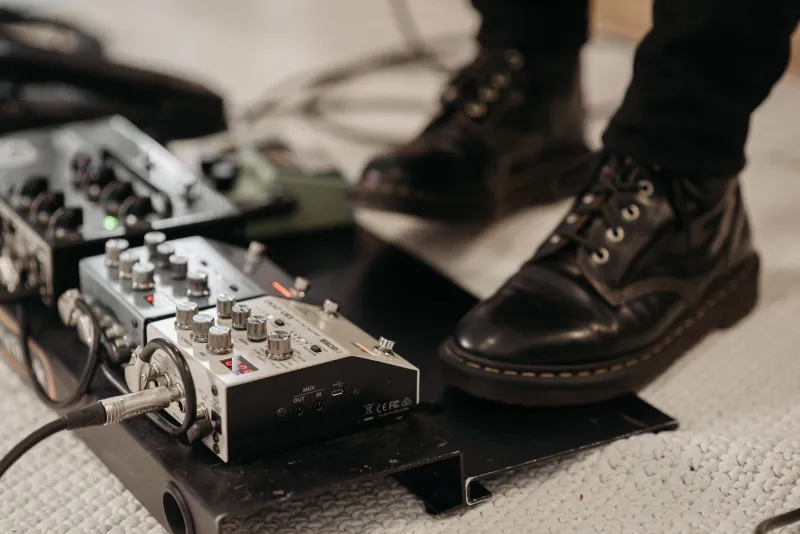
Let's be honest about something. The moment a new piece of gear stops feeling new — usually somewhere between two weeks and two months after you got it — there's a specific kind of itch that shows up. It's subtle at first. Maybe you start reading reviews of the next thing. Maybe you find yourself on a gear forum at midnight, not because you have a real problem to solve, but because the browsing itself feels productive. Like you're investing in your music.
You're not, though. And somewhere in the back of your head, you probably already know that.
This isn't a lecture about spending money. Gear is legitimately fun, and there's nothing wrong with caring about your tools. But there's a real cost to the acquisition cycle that rarely gets talked about honestly: every hour spent chasing the next upgrade is an hour not spent going deeper into the gear you already have. And going deeper is where the actual musical growth lives.
The Upgrade Illusion
Here's what the upgrade cycle feels like from the inside: you plateau on your current setup, you start wondering if different gear would unlock something new, you make the swap, and for a few weeks everything feels fresh and exciting. Your playing actually does improve a bit, because novelty forces attention and attention forces engagement.
But here's what's really happening: you didn't improve because the new gear is better. You improved because you were paying close attention. The moment that novelty fades, the plateau returns — and now you've reset your gear familiarity to zero. You're back to learning the new instrument or pedal or amp instead of going deeper into music.
Run that cycle enough times and you end up with a collection of gear you know superficially and a playing level that hasn't moved in years. It's a trap that catches a lot of players, and it's especially common in the US market where gear is accessible, gear culture is strong, and the next shiny thing is always a click away.
What the Thirty-Day Commitment Actually Does
The thirty-day gear freeze is a simple experiment with a surprisingly strong track record among musicians who've tried it. The rules are minimal: pick your current setup, commit to using only that for thirty days, and deliberately redirect any gear-browsing impulse into practice time instead.
That's it. No special program, no expensive course. Just a month of working with what you have.
What tends to happen in the first week is frustration. The things that annoyed you about your current setup suddenly feel more annoying because you've removed the mental exit ramp of "I'll just upgrade this part." That's actually useful. Frustration with a specific limitation forces creative problem-solving in a way that upgrading never does. You figure out workarounds. You discover that some of the limitations were actually just unfamiliarity.
By week two, something shifts for most players. When you can't change the tools, you start changing your approach. You dial in your amp differently. You find tones you hadn't found before. You learn the instrument more deeply because you're paying attention to it instead of planning its replacement.
By week four, a lot of players report something that genuinely surprises them: their setup sounds better than they remembered. Not because anything changed in the gear, but because they've developed a real relationship with it.
Building Your Own Experiment
If you want to run this yourself, a little structure helps. Here's a simple framework:
Week One — Inventory and Baseline. Before the freeze starts, spend a session really documenting where you are. Record yourself playing something representative of your current level. Write down what you like and don't like about your setup. Be specific. This baseline matters because human memory is terrible at tracking gradual improvement, and you'll want something concrete to compare against at the end.
Week Two — Constraint as Creativity. When you hit a limitation, write it down instead of immediately looking for a gear solution. Ask yourself: is this actually a gear problem, or is it a technique problem? Is there a way to achieve what I want with what I have? You'll be surprised how often the answer is yes.
Week Three — Go Deeper. Pick one aspect of your current setup that you've never fully explored. Maybe it's the clean channel on your amp that you always skip past. Maybe it's the middle pickup position you never use. Maybe it's the upper register of your instrument that you tend to avoid. Spend real time there.
Week Four — Reflect and Record. Record yourself playing the same piece you recorded in week one. Listen to both. Write down what's changed. Be honest about what improved and what didn't. This is your data.
What You'll Actually Learn
The most consistent thing players report after a thirty-day gear freeze isn't that they discovered their setup is perfect. It's that they discovered their setup is enough — and that the gap between where they are and where they want to be is a practice gap, not a gear gap.
That realization is genuinely liberating. It means the thing standing between you and the music you want to make is something you can actually control. No purchase required.
There's also a secondary benefit that's worth naming: when you do eventually upgrade something — and you will, because gear is part of this life — you'll do it from a position of real knowledge. You'll know exactly what your current setup does and doesn't do. You'll know what you actually need versus what just looks appealing in a demo video. That makes you a smarter buyer and a less susceptible target for the hype cycle.
The Gear Will Still Be There
Nothing is going anywhere. The pedals, the guitars, the amps — they'll all still exist at the end of your thirty days. The gear market isn't going to dry up while you're busy getting better at music.
But the version of yourself that comes out the other side of a focused month with your existing setup? That player is different. More grounded, more capable, and a lot clearer on what they actually want from their sound.
Your sound starts here — with what you already have.