Practicing the Pause: What Ambient Music Is Teaching Modern Musicians About Sound
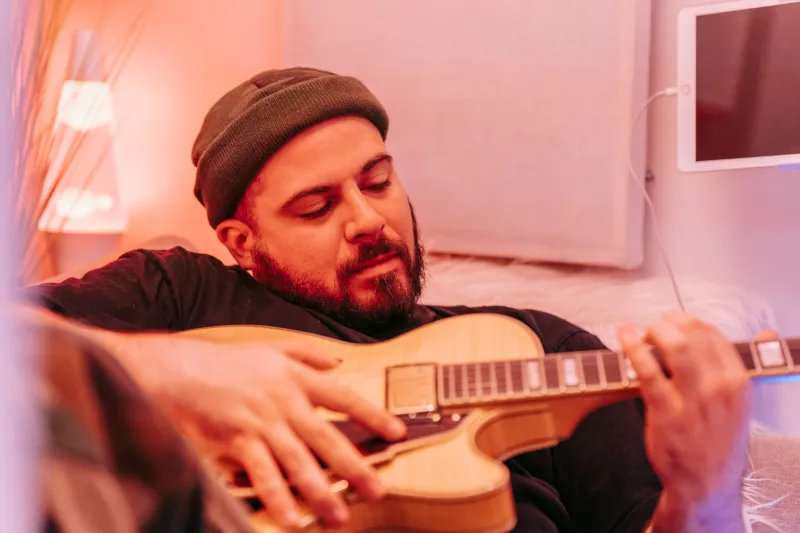
For decades, ambient music lived in the background. It was the stuff you'd find at a spa, or maybe looping softly in a coffee shop. Brian Eno famously said it should be as ignorable as it is interesting. But something has shifted. A growing number of musicians — guitarists, producers, classically trained pianists, even drummers — are pulling ambient soundscapes into their practice routines on purpose, not as background noise, but as a deliberate creative tool.
So what's actually going on here? Is this a genuine evolution in how musicians develop their craft, or is it just another shiny distraction dressed up in reverb and slow attack times?
The Rise of Generative and Ambient Practice
The ambient music scene has exploded in the last several years, thanks in part to artists like Stars of the Lid, William Basinski, and more recently, Grouper and Kali Malone. Streaming platforms have entire ecosystems built around it. But beyond the listening side, something interesting is happening in practice rooms and home studios across the country.
Musicians are actively creating ambient loops and textures as warm-up exercises. Instead of running scales or working through chord progressions, some players are sitting with a single sustained note, exploring its decay, its overtones, the way it interacts with a room. Others are setting up generative patches in modular synths or apps like Ableton's built-in tools and improvising over them for extended periods.
The idea is simple but kind of profound: when you strip away rhythm and melody as anchors, you're forced to listen differently. You start hearing things you normally tune out.
What Ambient Practice Actually Develops
Let's get specific, because this isn't just philosophical.
Ear training gets weird and useful. Traditional ear training focuses on intervals, chord recognition, and rhythm. Ambient practice pushes you toward timbral awareness — the ability to distinguish between textures, tones, and sonic layers. That skill transfers directly into mixing, arrangement, and even live performance. When you can hear the difference between a pad that sits in the 400Hz range versus one that's piling up around 2kHz, you make better decisions across the board.
Dynamics become a real instrument. In most band contexts, dynamics are managed through volume. Louder for the chorus, quieter for the verse. In ambient music, dynamics are everything — the difference between a sound appearing and disappearing, between presence and absence. Spending time in that space teaches musicians to value subtlety in a way that straight-ahead genre practice rarely does.
Patience and listening stamina improve. This one sounds soft, but it's genuinely underrated. Sitting with a slowly evolving texture for twenty or thirty minutes without reaching for your phone is harder than it sounds. Musicians who practice this kind of sustained attention report better focus during long sessions, rehearsals, and recording dates.
Songwriting and Composition Benefits
Among songwriters, ambient soundscapes are increasingly used as a starting point rather than a finishing touch. Instead of beginning with a chord progression or a riff, some composers will generate a texture — something atmospheric and unresolved — and then write into it, finding melodies or rhythms that feel organic to that sonic environment.
This approach flips the traditional songwriting process. Rather than building a house and then decorating it, you're starting with an atmosphere and letting the structure emerge. It's not for everyone, but for writers who feel stuck in formulaic patterns, it can be genuinely liberating.
Producers working in hip-hop, R&B, and indie rock have been doing versions of this for years. The ambient intro, the textured breakdown, the way a track breathes before the beat drops — these moments didn't appear by accident. They came from producers who spent time thinking seriously about space and sound.
Is This a Distraction Dressed Up as Discipline?
Here's the honest counterpoint: not everyone who says they're "doing ambient practice" is actually developing anything. There's a real risk that this becomes a way to feel productive while essentially just vibing. Sitting in front of a reverb-drenched sustain pedal for an hour isn't automatically useful.
The difference comes down to intentionality. If you're listening critically — asking yourself why something feels tense or resolved, what frequency range is dominating, how the room is responding — that's practice. If you're just zoning out to your own drone, that's closer to meditation, which is fine, but it's not the same thing.
The musicians getting real value from ambient practice are the ones who bring the same rigor they'd apply to learning a difficult passage or working through a rhythm chart. They're not passive. They're listening hard.
Bringing It Into Your Routine
If you're curious about incorporating this into your own practice, you don't need a modular synth or a pile of boutique pedals. A simple reverb and delay — the kind you probably already have — can get you started. Set a long decay, play a note, and listen to what happens. Try to describe what you're hearing out loud. That act of verbalization forces a level of attention that passive listening doesn't.
For guitarists, a volume pedal into a long reverb is a classic ambient setup that costs almost nothing extra if you're already gigging. Keyboard players can use any sustain-heavy patch and experiment with how long they can hold interest in a single chord voicing.
The goal isn't to become an ambient artist. It's to become a more attentive musician. And honestly, that's something the best players across every genre have always been chasing.