Borrow Before You Buy: Why Playing Someone Else's Pedal Might Be the Best Thing You Ever Do
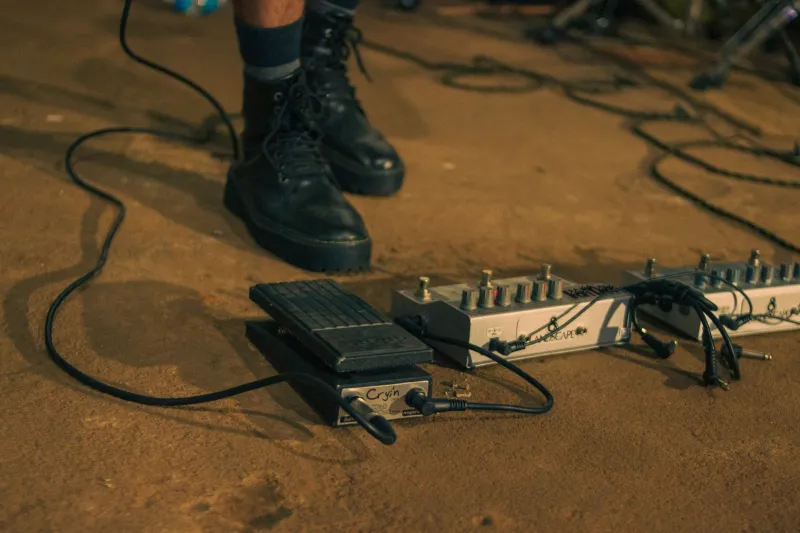
Here's a scenario that probably sounds familiar. You've watched fourteen YouTube demos of a chorus pedal. You've read every forum thread. You've compared the specs, the voicing options, the true bypass versus buffered debate — all of it. Then you buy the thing, plug it in at home, and it sounds... fine. Not life-changing. Just fine. And somewhere in the back of your head, you start wondering if you made the wrong call.
The problem wasn't the pedal. The problem was the process.
Buying gear based on online research alone is like trying to pick a restaurant by reading the menu out loud to yourself. You're missing the whole point. The real magic — or the real disappointment — only shows up when you actually play the thing in context. And that's something most of us skip entirely.
The Gear You Don't Know You Need
Every experienced player has a story about the piece of equipment that surprised them. Not the one they hunted down after months of research, but the random unit sitting on a friend's board, the loaner from a jam session, the demo unit a shop employee handed them just to try something different. That unexpected encounter is where a lot of the best gear discoveries actually happen.
There's something about playing an unfamiliar pedal with zero expectations that lets you hear it clearly. You're not trying to justify a purchase. You're not listening for the thing you read about in a review. You're just playing, and either something clicks or it doesn't.
That openness is almost impossible to manufacture when you've already spent $200 and you're standing in your bedroom hoping it sounds like the demo you watched six times last week.
Why Ownership Pressure Clouds Your Judgment
Psychologists have a name for the mental gymnastics we do after making a purchase — it's called post-purchase rationalization, and musicians are particularly susceptible. Once you own something, your brain starts working overtime to convince you that you made the right call, even when the honest answer is that the pedal doesn't really fit your sound.
This is how pedalboards end up with three different overdrive pedals that all kind of do the same thing. It's how closets fill up with gear that gets used twice a year. You bought it, you justified it, and now getting rid of it feels like admitting defeat.
The smarter move is to stress-test the gear before that ownership dynamic kicks in. Easier said than done, sure — but there are more ways to do it than most players realize.
Real Ways to Audition Gear Before You Commit
Hit up your local music shop — seriously. Demo days at shops like ours exist precisely for this reason. Bring your own guitar. Plug into an amp that's similar to what you use at home or at practice. Play the songs you actually play, not just scales or random noodling. A good shop will give you the time and space to actually evaluate the gear, not just poke at it for three minutes while someone waits behind you.
Lean on your gear-heavy friends. You almost certainly know someone whose pedalboard looks like a small city. Ask if you can borrow something for a rehearsal or a weekend. Most players are happy to loan out a pedal they're not actively gigging with, especially if it means getting honest feedback from someone they trust. These informal auditions are some of the most useful gear experiences you'll ever have, because they happen in real playing conditions — band rehearsals, home practice sessions, actual gig settings.
Look into rental options. Gear rental is more accessible than it used to be, and it's an underused resource in the musician community. Some shops offer short-term rentals on effects and equipment. Renting a pedal for a week costs a fraction of buying it, and it gives you enough time to actually live with the thing — to figure out whether it works in your practice setup, whether it plays well with your other effects, and whether you're still excited about it after the novelty wears off.
Go to open mics and jam nights. These low-pressure environments are great for encountering gear you've never played before. Other musicians bring their rigs, conversations happen naturally, and if you ask nicely, most people will let you run a chord or two through their setup. You're not going to get a deep evaluation in that context, but you might discover a sound direction you hadn't considered — which is worth something on its own.
The Lesson Hidden in the Unexpected
One of the more counterintuitive things about gear exploration is that the pedals you discover by accident often teach you more about your own sound than the ones you researched to death. When you're hunting for something specific, you're really just trying to confirm what you already think you want. But when you stumble onto something unfamiliar, you're forced to actually listen — to ask yourself whether this thing is doing something useful for your music, not just whether it matches the mental image you had going in.
That's a more honest conversation to have with yourself. And it tends to lead to better purchasing decisions.
It also leads to some genuinely unexpected sonic territory. Players who make a habit of trying unfamiliar gear tend to develop more distinctive sounds over time, because they're drawing from a wider pool of experience. They know what a variety of effects actually sound like in practice, not just in theory. That knowledge compounds.
Before You Click "Add to Cart"
The next time you're eyeing a new pedal — or really any piece of gear — try to build in at least one real-world audition before you commit. Come into the shop and spend some real time with it. Text a friend who might have something similar. Look into rental options. Go to a jam night and keep your ears open.
The gear will still be there. And if it's really right for your sound, you'll know it after playing it — not after reading about it.
Your sound starts with what you actually hear, not what you expect to hear. Give yourself the chance to find out the difference.