Tone Deaf to Your Own Needs: The Psychology Behind Gear You'll Never Actually Use
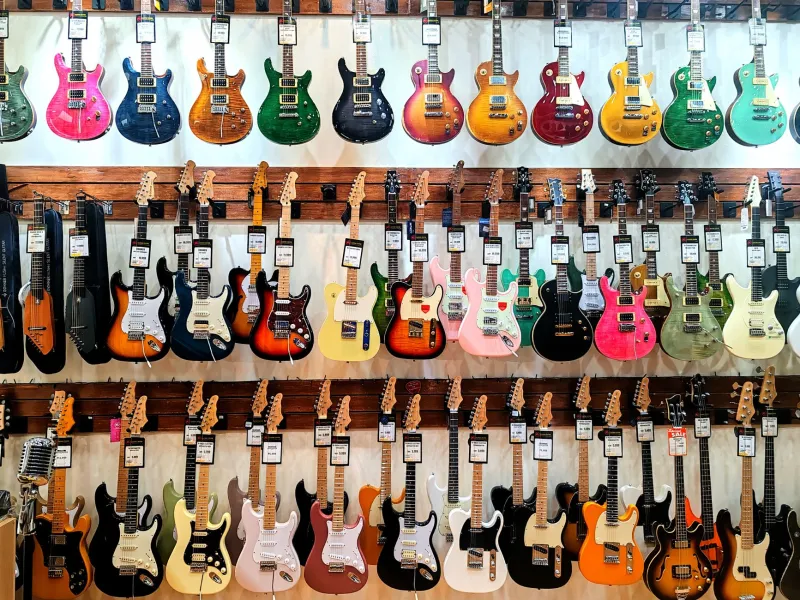
It starts innocently enough. You're scrolling through your feed at 11 p.m., half-watching a YouTube demo, and suddenly you're convinced that a particular boutique overdrive pedal is the missing piece in your entire musical life. Two weeks later, it's sitting on your shelf next to the chorus pedal you bought in March, the compressor you grabbed on a Black Friday deal, and the baritone guitar you were absolutely certain you needed last summer.
Sound familiar? You're not alone — and you're not weak-willed. You're human, and the gear-buying cycle is one of the most psychologically sophisticated traps in the music world. Let's break down exactly how it works and how you can step off the carousel for good.
The Itch That Gear Can't Scratch
Here's the uncomfortable truth most gear reviews won't tell you: the vast majority of impulse purchases don't solve a real problem in your playing. They solve a feeling. That feeling usually shows up when you're frustrated with your progress, bored with your current sound, or just restless after a rough practice session.
Psychologists call this "retail therapy" — the use of purchasing behavior to regulate negative emotions. Musicians are particularly vulnerable because gear is so intimately tied to identity. Buying a new instrument isn't just a transaction; it feels like an investment in who you are as an artist. That emotional charge makes it easy to rationalize almost any purchase as necessary.
The problem is that frustration with your playing rarely has a gear-based solution. If your solos feel uninspired, no amount of new pickups will fix that. If your rhythm playing feels stiff, a different guitar won't loosen it up. The real work — slow, deliberate practice, studying theory, listening critically — doesn't come in a shipping box.
How Social Media Manufactures Urgency
If your own psychology isn't enough to trip you up, the algorithm is happy to lend a hand. Social media platforms are extraordinarily good at surfacing gear content at exactly the right moment to exploit your restlessness.
Instrument manufacturers and gear brands have gotten remarkably sophisticated about this. Limited-edition colorways, "only 50 units available" announcements, and influencer unboxing videos are all engineered to create a sense of scarcity and urgency that bypasses rational decision-making. When you see your favorite guitarist raving about a new piece of kit, your brain doesn't fully register that they were paid to do it — it just files away the endorsement as a trusted recommendation.
There's also the comparison trap. Watching other musicians online — especially the polished, well-lit demos that make every piece of gear sound incredible — can make your own rig feel suddenly inadequate. The algorithm learns what makes you linger, and it keeps feeding you more of it. Before long, you've convinced yourself that everyone else is playing better gear and getting better results, and you're falling behind.
Spoiler: they're not, and you're not. But the feeling is real enough to open your wallet.
The "Just One More" Cycle
Gear acquisition follows a remarkably predictable pattern for a lot of musicians. You buy something new, get a brief rush of excitement, spend a week or two exploring it, and then slowly the novelty fades. The underlying dissatisfaction — whatever originally drove the purchase — returns. So you start looking again.
This is sometimes called the "hedonic treadmill" in behavioral economics: the tendency for humans to return to a baseline level of happiness regardless of positive changes in their circumstances. A new guitar gives you a genuine lift, but that lift is temporary. The treadmill keeps moving.
The music industry is, understandably, pretty happy to keep you on that treadmill. There's nothing wrong with the businesses selling great instruments and equipment — that's what we're here for too. But there's a meaningful difference between buying gear because it genuinely serves your musical goals and buying gear because you're chasing a high.
How to Tell the Difference Between a Need and a Want
So how do you actually distinguish between a legitimate gear upgrade and an impulse buy dressed up in justification? A few questions worth asking yourself before you hit "add to cart":
Can you name a specific musical problem this solves? Not a vague feeling, but a concrete limitation. "I need a better mic because my current one colors the high end in a way that doesn't work for my recording setup" is a real reason. "I just feel like my sound could be bigger" is not.
Have you lived with the problem long enough? If you just noticed the issue last week, wait a month. Many "problems" with your gear are actually problems with your technique or your ears adjusting to a new context. Give it time before you throw money at it.
Would you still want it if nobody else knew you had it? This is a surprisingly effective filter for status-driven purchases. A lot of gear decisions are at least partially about signaling — to other musicians, to social media followers, to yourself. If the appeal evaporates when you remove the audience, that's worth noticing.
What would you have to give up to buy this? Forcing yourself to think in terms of trade-offs — not just dollars, but time, space, and attention — makes the real cost of a purchase more concrete.
Intentional Buying as Artistic Discipline
Here's a reframe that might help: treating your gear decisions as a form of creative discipline rather than just financial management.
Some of the most tonally distinctive musicians in history were working with limited, often imperfect equipment. That constraint forced them to develop a relationship with their gear — to learn it deeply, to adapt to its quirks, to make it sound like them. The musicians who've cycled through dozens of rigs in search of their sound often have less of a defined voice than those who've committed to a setup and learned to master it.
Intentional purchasing means taking the time to get clear on what you actually want to achieve musically, then asking honestly whether a given piece of gear serves that goal. It means building in a waiting period before buying anything over a certain price threshold. It means keeping a short list of genuine gear needs and revisiting it periodically rather than reacting to whatever's trending.
None of this means you can't enjoy new gear or that every purchase needs to be a deeply considered philosophical act. Gear is fun. Trying new instruments is one of the genuine pleasures of being a musician, and we'd never tell you to stop exploring.
But there's a difference between joyful exploration and compulsive accumulation. One feeds your music. The other just feeds the algorithm.
The Real Investment
At the end of the day, the most valuable thing you can invest in as a musician isn't a piece of gear — it's clarity about what you're actually trying to do. When you know what your music needs, buying decisions get a lot easier. You spend less, use more of what you own, and — this is the part that actually matters — you play better.
Your sound starts with intention. Everything else is just equipment.