Read the Wear: What a Repair Tech Sees in Your Instrument That You've Been Missing
When you drop your guitar off for a setup or bring your saxophone in for a pad replacement, you're probably thinking about one thing: getting it back in playing condition. But the tech working on your instrument is reading something else entirely. Before they even pick up a screwdriver, they're looking at your gear the way a doctor reads an X-ray — scanning for patterns, noting anomalies, building a picture of the person who plays it.
At Shabach Music Shop, we've had a lot of conversations with repair technicians over the years, and one thing comes up constantly: the wear on an instrument is almost always a more honest account of someone's playing habits than anything the musician tells them. Here's what that wear actually means.
The Guitar That Tells on You
Start with the frets. Fret wear is one of the most informative things a tech can look at on a stringed instrument. Heavy wear concentrated in the first five frets almost always points to a player who lives in open position — someone who favors cowboy chords, basic fingerpicking patterns, or beginner-level material. That's not a judgment; it's just data. But if that player thinks of themselves as intermediate or advanced, there's a gap worth addressing.
Uneven fret wear across the neck — deep grooves under certain strings and clean metal under others — can reveal which fingers are doing too much work and which ones are barely contributing. A player with heavy wear under the first and second strings but almost none under the fourth and fifth is probably relying heavily on their index and middle fingers while underdeveloping their ring and pinky. A good tech will mention this. A great tech will explain why it matters.
Then there's the nut. A guitar nut that shows deep string grooves on the wound strings but barely any on the plain strings can indicate that a player is bending aggressively on the high strings but rarely engaging the low end — common in lead-focused players who haven't fully explored rhythm playing.
Broken Strings and What They're Really Saying
String breakage location is one of the most telling diagnostics in the repair world. If your strings consistently break at the bridge saddle, there's almost certainly a sharp edge causing the problem — but the question is why you're breaking them there in the first place. Aggressive downpicking or heavy-handed strumming accelerates the wear at that contact point. The string is just failing where the stress is highest.
Strings breaking near the tuning machines usually point to a winding or installation issue, but repeated breakage in the same spot on the same string can also indicate that a player is bending excessively at the headstock end — a technique issue, not just a setup problem.
For bassists, string wear that's concentrated toward the neck pickup rather than evenly distributed across the playing area suggests a player who's anchoring too far forward, which affects both tone and technique. A tech who knows what they're looking at will often spot this before the player has ever noticed it themselves.
What Drum Kits Reveal
Drummers think their kit is just taking a beating — and they're right, but the pattern of that beating is specific. Head wear that's centered and symmetrical indicates a player with good stick control and consistent stroke mechanics. Head wear that's off-center, clustered toward one edge, or dramatically heavier on one side of the snare points to inconsistent stroke paths — often a symptom of grip issues or poor posture that the player has compensated around rather than corrected.
Cymbal wear is equally revealing. Ride cymbals that show heavy tip wear in a small, defined area suggest a player who's very locked into one specific playing position, which can limit dynamic range and expression. Bell wear on a ride often shows up on players who over-rely on the bell for accents rather than developing a more nuanced playing relationship with the bow.
Cracked cymbals near the edge almost always indicate that a player is hitting across the cymbal rather than glancing off it — a technique issue that's also an equipment cost issue, since it destroys cymbals much faster than proper striking technique.
Horns and Keys Don't Lie Either
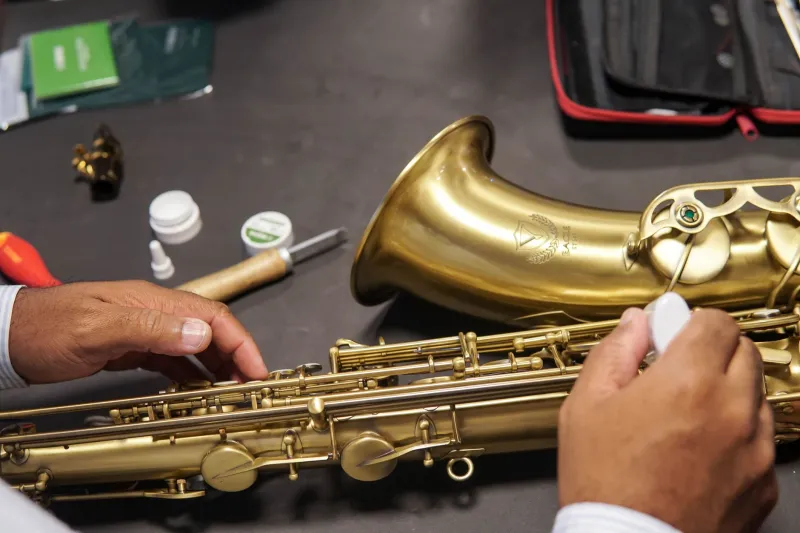
On woodwinds and brass, pad and key wear tells a similar story. Saxophone pads that show excessive wear on one side of the cup indicate uneven key pressure — a player who's pressing down with more force than necessary on certain fingers, often because they never fully resolved the tension in their hands during the learning process. This kind of over-gripping is incredibly common and often completely invisible to the player.
On piano and keyboard, key surface wear concentrated on the lower octaves versus the upper register can reveal a player's comfort zone. Worn ivories in the middle C to C5 range with pristine keys above and below? That player is comfortable in one register and probably avoids the extremes of the instrument more than they realize.
Turning the Diagnosis Into Development
Here's the real value in all of this: your instrument's wear pattern is a map of your habits, and habits are the foundation of technique. If a tech or a knowledgeable shop employee points something out to you, it's worth sitting with that information rather than brushing it off as a setup quirk.
Next time you bring your instrument in for service — whether it's a basic setup, a repad, a neck adjustment, or a full restoration — ask your tech what they're seeing. Ask what the wear tells them. You might be surprised how much they've already figured out about your playing before you've said a single word.
Your instrument has been paying attention even when you weren't. It might be time to listen to what it's been keeping track of.