Pick Your Six: How to Find the Right Guitar When You're Just Getting Started
So you've decided to learn guitar. Excellent choice. The guitar is one of the most versatile, portable, and expressive instruments on the planet — which is exactly why roughly 16 million Americans play one. But before you can start strumming your favorite song, you've got a decision to make that trips up almost every beginner: what kind of guitar do you actually need?
The three main options — acoustic, electric, and hybrid (also called electro-acoustic) — each come with their own personality, learning curve, and best use cases. There's no universally correct answer, but there's probably a right answer for you. Let's walk through it.
Option 1: The Acoustic Guitar — No Frills, All Feel
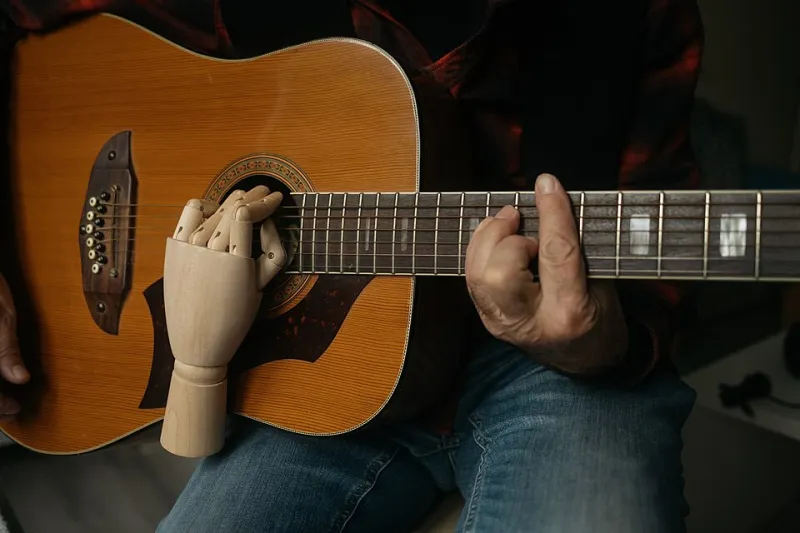
The acoustic guitar is the one most people picture when they think "guitar." Big hollow body, steel or nylon strings, no amp required. You pick it up, you play it, end of story.
Sound: Rich, resonant, and completely self-contained. Acoustic guitars produce a full, natural sound that's especially well-suited to folk, country, bluegrass, singer-songwriter material, and unplugged pop. The tone varies significantly based on the wood used in construction — spruce tops tend to be bright and articulate, while mahogany leans warmer and more mid-forward.
Learning curve: Acoustic guitars, particularly steel-string models, have higher string action (the distance between the strings and the fretboard) and thicker strings than most electrics. This means your fingertips will get a workout early on. The calluses you build on an acoustic will make switching to any other guitar feel easy later.
Best for:
- Players drawn to folk, country, Americana, or singer-songwriter styles
- Anyone who wants to play without needing extra equipment
- Students who plan to play at campfires, casual gatherings, or coffee shop open mics
- Budget-conscious beginners (a solid starter acoustic can be found for $100–$200)
Heads up: Acoustic guitars are louder by nature, which can be a consideration if you live in an apartment or have roommates with opinions about 11 p.m. practice sessions.
Option 2: The Electric Guitar — Built for Volume, Versatility, and Style
Electric guitars are solid-body (or semi-hollow) instruments that produce very little sound on their own. They need to be plugged into an amplifier to really sing — and when they do, the range of sounds available is enormous.
Sound: Thin and twangy clean, crunchy with a little overdrive, or full-on roaring distortion — the electric guitar's tone is shaped as much by your amp and effects pedals as by the instrument itself. This makes it incredibly versatile. The same guitar can cover blues, rock, metal, jazz, and country depending on how you dial in your gear.
Learning curve: Here's a secret many beginners don't know: electric guitars are often easier to play physically than acoustics. The strings are lighter, the action is lower, and the neck is usually slimmer. If finger soreness is your biggest fear about starting guitar, an electric might actually be the more comfortable entry point.
Best for:
- Players who love rock, metal, blues, jazz, or pop
- Anyone motivated by tone-shaping and gear experimentation
- Beginners who want to play along with their favorite recordings from day one
- Apartment players who can use headphone amps or low-watt practice amps to keep volume in check
Heads up: The upfront cost is higher because you'll need an amp in addition to the guitar. Budget for both. A basic but solid starter electric rig — guitar plus a small practice amp — typically runs $250–$400 combined.
Option 3: The Hybrid (Electro-Acoustic) Guitar — Best of Both Worlds?
Hybrid guitars, commonly called electro-acoustics or acoustic-electrics, look and feel like standard acoustic guitars but come equipped with a built-in pickup system and often an onboard preamp. You can play them completely unplugged, or plug into a PA system or acoustic amp when you need more volume.
Sound: Unplugged, they sound like a regular acoustic. Plugged in, the pickup captures the natural resonance of the instrument and sends it to the sound system — though the amplified tone is generally a bit different from a purely acoustic sound, and quality varies significantly by pickup type.
Learning curve: Same as a standard acoustic. The electronics add no complexity to the playing experience, though you'll want to learn the basics of your onboard EQ controls when you start performing live.
Best for:
- Players who want one guitar that works both at home and on stage
- Gigging musicians who play coffee shops, small venues, or church settings
- Singer-songwriters who need to plug in occasionally without owning a separate electric guitar
- Anyone who's already comfortable with acoustic playing and wants to expand their options
Heads up: Entry-level electro-acoustics sometimes have mediocre pickup systems that can sound harsh or feedback-prone in live settings. If you go this route, it's worth spending a little more to get a guitar with a decent preamp.
Quick Comparison at a Glance
| Acoustic | Electric | Hybrid | |
|---|---|---|---|
| Needs an amp? | No | Yes | Optional |
| Best genres | Folk, country, pop | Rock, blues, metal, jazz | Singer-songwriter, live acoustic |
| Physical difficulty | Moderate-high | Low-moderate | Moderate-high |
| Starter cost | $100–$250 | $250–$400 (with amp) | $150–$350 |
| Portability | High | Medium | High |
The Real Question: What Music Do You Want to Make?
All the specs in the world won't help if you ignore this one factor. Think about the songs that made you want to pick up a guitar in the first place. If it was a Taylor Swift acoustic performance, start acoustic. If it was Hendrix or Metallica, go electric. If you're picturing yourself playing at your church's worship night or a small open mic, a hybrid might be your best bet.
Playing an instrument you're excited about is the single biggest factor in whether you'll stick with it. Don't let anyone talk you into a guitar that doesn't match your vision.
Come Try Before You Buy
Reading about guitars is useful. Actually holding one and playing a few notes is better. At Shabach Music Shop, we carry a range of acoustic, electric, and electro-acoustic guitars for every budget and skill level, and our staff genuinely loves helping beginners find their first instrument. Stop in, ask questions, and take a few for a test strum.
Your sound starts here — and it starts with the right guitar in your hands.