Practice Smarter, Not Longer: The Modern Musician's Toolkit for Faster Growth
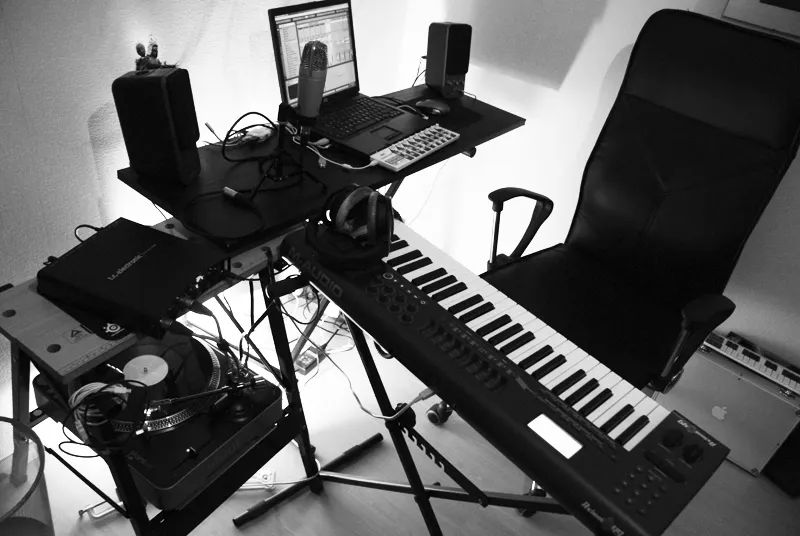
Photo: Shixart1985, CC BY 2.0, via Wikimedia Commons
Let's be honest — most of us have sat in front of an instrument for an hour, run through the same patterns we already know, and walked away feeling like we practiced without actually improving much. It's the musical equivalent of going to the gym and only doing exercises you're already comfortable with. The motion is there, but the growth isn't.
Here's the thing: the way musicians practice has changed dramatically over the last decade. The tools available to today's players — from smart apps to loop pedals to AI-powered feedback — are genuinely transformative when used with intention. The problem isn't a lack of options. It's knowing which tools actually serve your specific goals.
So let's dig into it.
First, Know What You're Actually Trying to Accomplish
Before you invest in any practice tool, get specific about what you want to improve. "Get better at guitar" is not a goal — it's a direction. "Play through a 12-bar blues progression cleanly at 120 BPM" is a goal. "Nail the chord transitions in that song I've been avoiding" is a goal.
This sounds obvious, but most musicians skip this step entirely. And it matters because different tools serve radically different purposes. A drummer working on rudiments has almost nothing in common with a vocalist trying to improve pitch accuracy, even though both might benefit from targeted practice technology.
Once you know your goal, you can pick the right tool for the job.
Loop Pedals: The Secret Weapon Most Players Overlook
If you play guitar, bass, or any melodic instrument and you haven't tried a loop pedal in your practice routine, you're missing out on something special. Loop pedals let you record a short phrase and play it back continuously while you improvise or layer parts on top — and they're not just for live performance.
In a practice context, loop pedals are incredible for developing timing, ear training, and creative thinking simultaneously. Record a chord progression, then improvise a melody over it. You'll immediately hear whether your phrasing is locking in rhythmically or floating around the beat. No backing track required, no app to set up — just you and your instrument.
Entry-level options like the Boss RC-1 or the TC Electronic Ditto are under $100 and dead simple to use. More advanced players might gravitate toward the Boss RC-5 or Headrush Looperboard for expanded functionality. Either way, adding a looper to your practice setup is one of the highest-value investments a working musician can make.
Apps That Actually Deliver (And a Few That Don't)
The app stores are flooded with music practice tools, and the quality varies wildly. Here are a few that have earned genuine respect from working musicians:
Tonal Energy Tuner — Don't let the "tuner" label fool you. This app includes a metronome, a drone generator, and a tone analyzer that gives you visual feedback on your pitch accuracy in real time. For vocalists and wind players especially, it's invaluable.
Simply Piano / Yousician — These gamified lesson platforms get mixed reviews from serious musicians, but for absolute beginners trying to build basic reading skills and hand coordination, they're genuinely useful as a supplement to traditional practice.
Transcribe! — This desktop and mobile tool lets you slow down recordings without changing the pitch, loop sections, and mark up the audio with notes. If you learn music by ear, this is the closest thing to a superpower you'll find.
GarageBand / BandLab — Both free, both excellent for practicing songwriting and arrangement. Record yourself, listen back critically, and you'll learn more in one session than in weeks of playing without recording.
The app that probably does the least for serious practice? The default metronome on your phone. Not because metronomes are bad — they're essential — but because phone metronomes offer almost no flexibility in feel, subdivision, or accent patterns. Invest in a dedicated hardware metronome or a more robust app like Pro Metronome.
Drummers and Percussionists: Practice Pads Are Non-Negotiable
If you're a drummer, you already know the challenge: you can't always sit down at a full kit. Practice pads solve this problem, but they're genuinely useful beyond just keeping the neighbors happy.
A quality practice pad — the Vic Firth Heavy Hitter or the Remo Practice Pad are both excellent — gives you a surface that closely mimics the rebound of a real snare drum. Working on rudiments with a pad forces you to focus purely on technique without the distraction of sound and feel from a full kit. Many elite drummers maintain pad practice as a permanent part of their routine, not just something they do when a kit isn't available.
For those looking to level up, electronic drum pads like the Roland SPD-SX or Alesis Strike Multipad open up a world of practice scenarios — you can load in backing tracks, practice to a click, and record your performance for review.
The Underrated Power of Recording Yourself
This one is free, requires no new gear if you already own a smartphone, and is probably the single most effective practice technique that musicians consistently avoid: record yourself and listen back.
It's uncomfortable. Your timing sounds worse than you thought. Your tone has issues you didn't notice while playing. But that discomfort is information, and information is how you improve. Professional musicians across every genre record themselves constantly — it's one of the few ways to get genuine objective feedback when you're practicing alone.
Even a rough voice memo recording is valuable. You don't need studio-quality audio to identify that your chord transitions are sloppy or that your timing rushes on the chorus.
Building a Practice Routine That Sticks
Here's an honest take: the best practice tool in the world is useless without consistency. Twenty focused minutes every day will outperform a two-hour marathon session once a week, almost every time. Your brain consolidates motor skills and musical memory during sleep — so frequent, shorter sessions are scientifically more effective for skill development.
A simple framework that works for a lot of musicians:
- Warm-up (5 min): Scales, long tones, or rudiments at a comfortable tempo.
- Technique work (10–15 min): One specific skill, pushed just past your comfort zone.
- Repertoire (10–15 min): Songs or pieces you're actively working on.
- Free play (5–10 min): No goals, just enjoy playing. This keeps music fun.
Layer in your tools intentionally — the loop pedal during free play, the recording app during repertoire, the metronome during technique work.
The Bottom Line
Getting better at music isn't about grinding through hours of mindless repetition. It's about showing up with intention, using the right tools for your specific goals, and staying honest with yourself about where you actually are versus where you want to be.
At Shabach Music Shop, we love talking about this stuff because we genuinely believe the right gear — whether that's a loop pedal, a practice pad, or a solid app recommendation — can unlock a new level of growth for any musician. Come explore what we've got, ask questions, and let's build a practice routine that actually gets you somewhere.