From Bedroom to Booth: Building Your First Home Studio on Any Budget
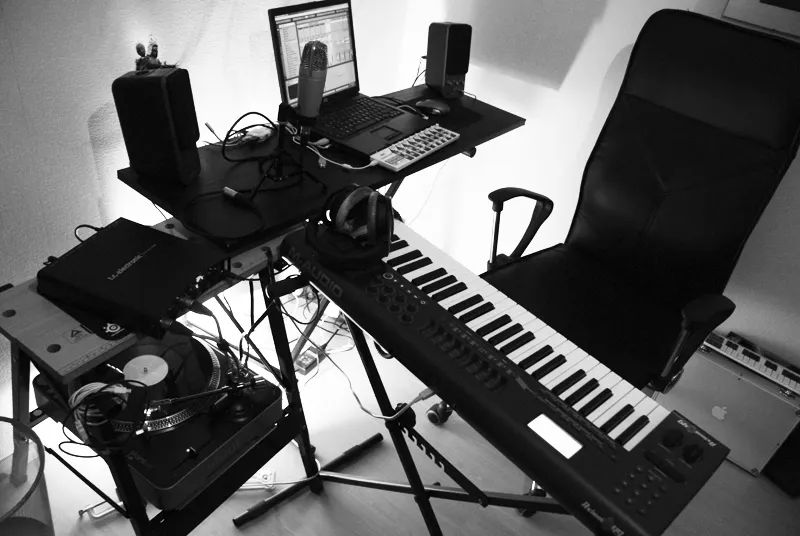
Photo: LiquidMolly, CC BY-SA 2.0, via Wikimedia Commons
There's a moment every musician knows well — you've got a riff stuck in your head at 11 PM, you hum it into your phone, and by morning it's gone or sounds like it was recorded inside a washing machine. That's the moment you realize you need a real home recording setup.
The good news? You don't need to drop thousands of dollars to build something that works. Whether you're a singer-songwriter, a beatmaker, or a guitarist looking to lay down demos, a solid home studio is more accessible than ever. Let's walk through what you actually need, what's nice to have, and how to make smart decisions at every price point.
Start With the Signal Chain: Your Audio Interface
If there's one piece of gear that separates a real home studio from just plugging into your laptop's headphone jack, it's the audio interface. This little box converts analog sound — your voice, your guitar, your keyboard — into a digital signal your computer can work with. It also handles playback, which means you'll hear your recordings with much better clarity.
For beginners, something like the Focusrite Scarlett Solo or the PreSonus AudioBox USB 96 is a fantastic starting point. Both sit in the $100–$130 range and deliver clean, professional-quality conversion. If you're planning to record multiple sources at once — say, a guitar and a vocal simultaneously — step up to a two-channel interface like the Scarlett 2i2. It's a small price jump that opens up a lot of creative flexibility.
Don't overthink this one. Almost any modern interface from a reputable brand will serve you well at the beginner level. What matters more is learning how to use it.
Microphones: One Good Mic Beats Five Mediocre Ones
Here's the truth about microphones: you don't need a collection. You need one good one.
For most home recording situations, a large-diaphragm condenser microphone is your best all-around choice. It handles vocals beautifully, works great on acoustic guitar, and does a decent job on most acoustic instruments. The Audio-Technica AT2020 is practically the gold standard at around $100 — it's used in home studios across the country and consistently punches above its price.
If you're primarily recording electric guitar through an amp, a dynamic mic like the Shure SM57 is the industry workhorse. It's tough, it sounds great on guitar cabs and snare drums, and it'll last you decades. Many experienced engineers will tell you the SM57 is one of the best mics ever made, full stop.
One important note: condenser mics require phantom power (usually labeled 48V on your interface), so make sure your interface supports it before buying. Most modern ones do, but it's worth double-checking.
Headphones and Monitors: Hear What You're Actually Making
Your laptop speakers are lying to you. They're hyping certain frequencies and hiding others, which means a mix that sounds great on your MacBook might sound muddy and bass-heavy everywhere else.
Studio headphones are the most budget-friendly solution for monitoring. The Sony MDR-7506 and the Audio-Technica ATH-M50x are both popular choices under $150 that give you a relatively flat, accurate sound. "Flat" in audio terms means they're not artificially boosting bass or treble — you hear things closer to how they really are.
Once your budget allows, a pair of studio monitor speakers (not consumer speakers or Bluetooth bookshelf units) will take your mixing to the next level. Entry-level monitors from Yamaha, KRK, or Mackie start around $200–$300 for a pair and make an enormous difference in how accurately you can judge your mixes.
Software: Your Digital Recording Studio
Your Digital Audio Workstation, or DAW, is the software you use to record, arrange, edit, and mix your music. The great news is you probably already have a solid option available.
- GarageBand (free on Mac/iOS) is genuinely excellent for beginners and even intermediate producers. It's loaded with instruments, loops, and effects.
- Audacity is a free, cross-platform option that's better suited for basic recording and editing than full music production.
- Reaper costs just $60 for a personal license and is one of the most powerful DAWs available at any price.
- Ableton Live Intro, Logic Pro (Mac only), and FL Studio are popular paid options with free trials worth exploring.
Don't get paralyzed by DAW choice. Pick one, learn it deeply, and you'll be recording music that sounds good faster than you think.
Room Treatment: The Invisible Upgrade
This is the part most beginners skip — and it's one of the biggest reasons home recordings sound "off." Hard, bare walls cause sound to bounce around and create unwanted echoes and frequency buildups called standing waves. No amount of gear can fully compensate for a bad-sounding room.
You don't need to install professional acoustic panels (though they help). Start with what you have:
- Record in a carpeted room whenever possible. Hard floors reflect sound; carpet absorbs it.
- Use a closet full of clothes as a makeshift vocal booth. Seriously — it works surprisingly well.
- Hang thick curtains or moving blankets on walls near your recording area.
- Place bookshelves filled with irregularly sized books to diffuse sound naturally.
If you want to invest a little money, acoustic foam panels are relatively cheap and can make a noticeable difference when placed at reflection points — the spots on your walls where sound bounces directly from your monitors to your ears.
Putting It All Together: Budget Tiers
Here's a rough breakdown of what a functional home studio looks like at different spending levels:
Under $300: Audio interface + one condenser mic + studio headphones + free DAW. This is enough to record vocals, acoustic instruments, and direct-input guitar or bass. It's a real setup.
$300–$700: Add a dynamic mic, a basic mic stand and pop filter, some acoustic treatment, and a paid DAW with more features. You're now working with a setup that can produce release-quality recordings with good technique.
$700–$1,500: Introduce a pair of studio monitors, upgrade your interface to a four-channel model, and start building out your plugin library. At this level, your home studio is genuinely competitive with small professional setups.
Your Sound is Waiting
Here's the thing about home recording: the gear matters, but your ears and your creativity matter more. Some of the most iconic recordings in music history were made in bedrooms and basements with modest equipment. What they had in common wasn't expensive gear — it was a clear vision and the willingness to put in the time.
At Shabach Music Shop, we believe every musician deserves access to the tools that help them capture their sound. Whether you're just starting out or looking to upgrade your existing setup, we've got the gear, the advice, and the community to help you get there. Your sound starts here — now go make some noise.