Why Your Band Sounds Like Mud: The Hidden War Happening Inside Your Mix
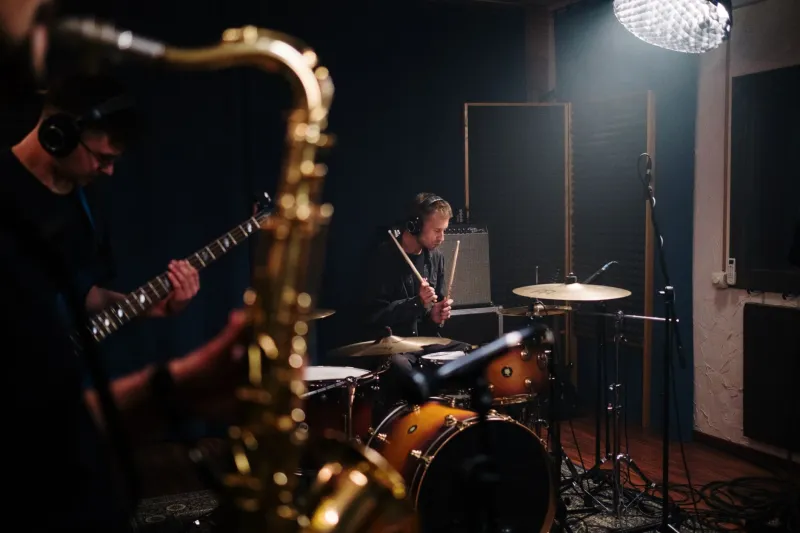
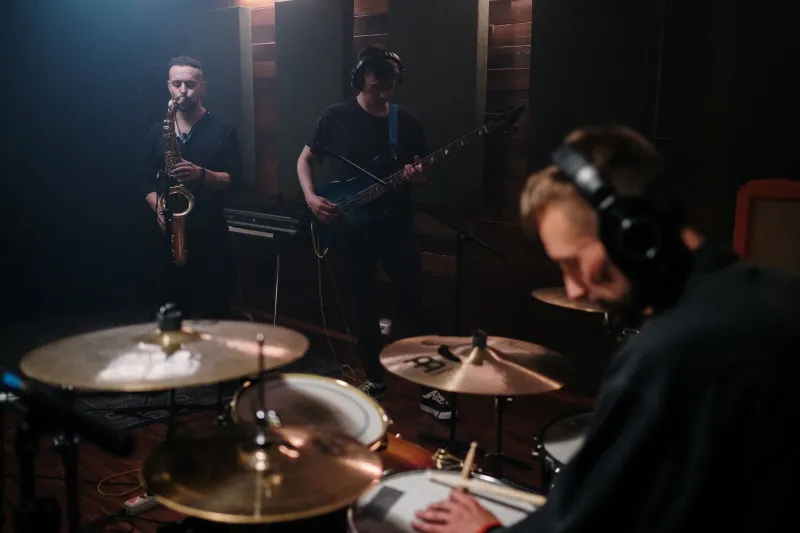
You've got a solid drummer, a bassist who locks in tight, a guitarist with great tone, and a keys player who can actually play. Rehearsal sounds promising. Then you hit record — or worse, you hit the stage — and suddenly everything sounds like someone threw a blanket over the PA. Thick, crowded, indistinct. You can hear something, but you can't really hear anything.
Welcome to frequency masking, and it's probably the most common sonic problem that nobody talks about at the music shop.
Here's the thing: this isn't about bad musicians or bad gear. It's about physics. And once you understand what's actually happening between those speakers, you'll never listen to a mix the same way again.
The Spectrum Is Shared Real Estate
Think of the audible frequency range — roughly 20Hz to 20,000Hz — like a city block. Every instrument in your band needs an address on that block. The trouble is, most common instruments want to live in the same neighborhood: the midrange, somewhere between 200Hz and 3kHz.
Your guitar's fundamental tones? Right there. Your keyboard comping chords? Same block. Vocals trying to cut through? Yep, same zip code. Even a snare drum has significant energy sitting in that midrange range. When four or five instruments all crowd into the same frequencies at the same volume, none of them get heard clearly. They just cancel each other out or blend into one big, undefined smear.
Producers call this frequency masking — when one sound hides another because they're occupying the same spectral space. It's not about volume. You can turn everything up and just make the problem louder.
Where the Common Culprits Actually Live
Before you can fix the problem, it helps to know who's causing the traffic jam. Here's a rough breakdown of where typical band instruments hang out:
- Bass guitar and kick drum share a lot of energy in the 60–200Hz range. When they're not coordinated, the low end becomes a boomy, undefined rumble.
- Rhythm guitar typically sits between 200Hz and 5kHz, with a lot of its character in the 800Hz–2kHz zone.
- Piano and keyboards are wide-range instruments that can eat up everything from 80Hz all the way to 8kHz depending on what register they're playing in.
- Vocals live mostly in the 300Hz–3kHz range — right in the middle of everything else.
- Snare drums punch hard around 200Hz and 1–2kHz.
See the problem? Almost everyone's fighting over that 200Hz–3kHz sweet spot. Without some deliberate arrangement or EQ decisions, you're going to end up with sonic gridlock.
What Pro Producers Do Differently
Professional producers don't just record great musicians and call it a day. A huge part of their job is carving out space for each element in the mix. They do this through a combination of arrangement choices, EQ, and strategic thinking about what each instrument actually needs to do in a song.
One of the most effective techniques is high-pass filtering — rolling off the low-end frequencies from instruments that don't need them. Your rhythm guitar doesn't need to reproduce anything below 100Hz. Your piano doesn't need to compete with the bass in the sub-frequencies. Cutting those unnecessary low frequencies from non-bass instruments instantly cleans up the low end and gives the kick and bass more room to breathe.
Another pro move is frequency complementing — where instruments are EQ'd to emphasize different parts of the spectrum. Maybe the guitar gets a slight boost around 2–3kHz for presence, while the keys are dialed back in that same range and pushed a little higher for air and shimmer. Neither instrument loses its character; they just stop stepping on each other.
Band Arrangement Tricks That Don't Require a Studio
Here's the good news: you don't need a professional studio or an expensive audio interface to start fixing frequency conflicts. A lot of this work happens before you even hit record.
Rethink what your keyboard player is doing. Keys are one of the biggest offenders when it comes to frequency crowding. If you've got a guitarist, does the keys player really need to be comping full chords in the same register? Try moving the keyboard parts up an octave or switching to a pad sound that sits higher in the mix. Suddenly, the guitar and keys have their own lanes.
Talk to your bassist and drummer about the low end. The kick and bass need to work as a team. In a lot of great recordings, the kick drum is scooped slightly in the frequencies where the bass guitar's fundamental sits — and vice versa. Even live, a bassist who understands this will naturally play in a way that complements the kick rather than competing with it.
Give your vocalist a lane. If your backing instruments are filling up the 500Hz–2kHz range completely, your singer is going to fight to be heard no matter how loud the monitor is. Try pulling back some of the guitar's midrange presence when the vocals are the focus. The guitar doesn't disappear — it just makes room.
Use space as an instrument. Not every player needs to be filling every moment. Leaving space — rhythmically and tonally — is one of the oldest arrangement tricks in the book. Listen to classic soul or funk records and notice how much room there is between the parts. That space is intentional, and it's part of why those records still sound so clear and punchy decades later.
Simple Gear That Helps
If you want to start addressing this more directly, a few tools can make a real difference without breaking the bank.
A decent parametric EQ pedal for your guitar rig lets you carve out specific problem frequencies before the signal even hits the amp. Brands like MXR and Boss make solid, affordable options that work great on a pedalboard. For keys players, many modern stage pianos and synths have built-in EQ that's worth actually using.
For home recording, free plugins like TDR Nova or Voxengo Marvel GEQ give you surgical EQ control on every track. Spend an afternoon learning to high-pass filter your tracks and you'll hear an immediate difference in how clear your mixes sound.
If you're doing live sound, work with your soundperson to understand where each instrument is sitting. A good front-of-house engineer is already thinking about this stuff — and a band that understands frequency management is a joy to mix.
Your Sound Starts With Understanding It
The goal isn't to make everything sound thin or stripped down. It's to make every instrument audible, defined, and purposeful. When each part of your arrangement has its own frequency real estate, the overall sound actually feels bigger — not smaller — because your ears can process each element clearly.
Muddiness is almost never about playing harder or adding more. It's about playing smarter and listening to what's actually happening in the full spectrum of sound your band produces together.
Once you start hearing frequency conflicts, you can't unhear them. And fixing them? That's when your music starts sounding like the record you always imagined it could be.