Stop Waiting for Perfect: The Gear Myth That's Stealing Your Best Playing Years

Somewhere in America right now, there's an aspiring guitarist with seventeen browser tabs open — comparing fretboard radii, reading Reddit threads about tonewoods, watching YouTube reviews of instruments they haven't touched yet. They've been doing this for months. Maybe longer. They're not playing music. They're shopping for the idea of music.
It's a trap so common it barely registers as a problem anymore. But make no mistake: the pursuit of the perfect instrument before you even know what you need is one of the most effective ways to guarantee you never really get started.
The Myth of the Right Starting Point
There's a persistent belief floating around music communities — online forums, comment sections, well-meaning family members — that your first instrument needs to check certain boxes before it's worth your time. It should be the right brand. The right action. The right tone. The right price point, but not too low, because cheap instruments are supposedly unplayable.
This isn't entirely baseless. A truly unplayable instrument — one with action so high it draws blood or tuning pegs that slip every thirty seconds — is a real obstacle. But that bar is a lot lower than most people assume. The gap between a $150 starter guitar and a $900 mid-range model matters far less than the gap between playing every day and playing never.
The research phase feels productive. It mimics the sensation of progress without requiring any of the actual work. And the longer it goes on, the more elaborate the justifications become.
What Real Musicians Actually Started With
Talk to working musicians long enough and a pattern emerges: almost none of them started with the gear they eventually became known for. Most started with whatever was around.
Marcus, a session bassist based out of Nashville who's played on records you've definitely heard, started on a plywood acoustic his uncle left in a closet. "The action was terrible," he says. "My fingers hurt for the first three months. But I learned to press hard, and honestly, that built up my hand strength faster than anything. When I finally got a real bass, it felt like cheating."
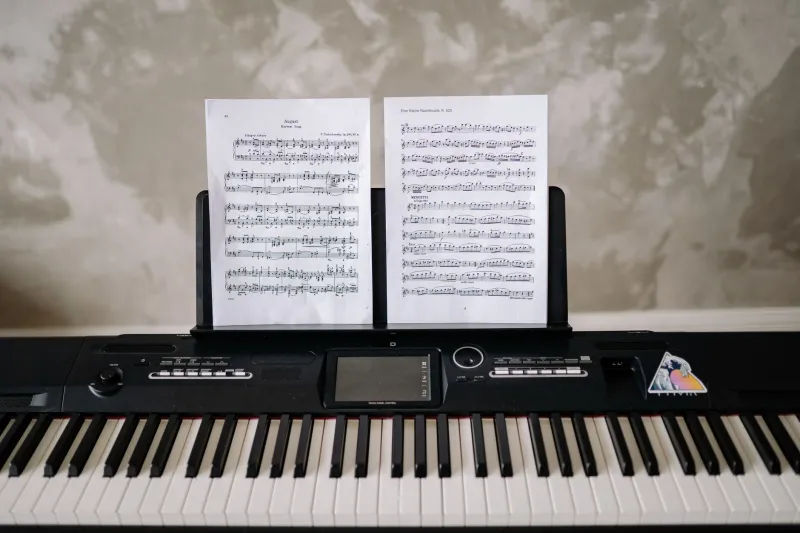
Denise picked up music in her twenties on a $99 keyboard from a big-box store. No weighted keys, no aftertouch, a grand total of four usable sounds. She's now a touring keyboardist and runs her own production company. "That keyboard had nothing going for it," she laughs. "So I had to figure out how to make it interesting. I learned to work with limitations before I even knew that was a skill."
These stories aren't exceptions. They're the rule. The limitation itself becomes the teacher.
Why 'Wrong' Gear Teaches the Right Lessons
Here's something the gear research rabbit hole doesn't tell you: the skills that actually make you a musician — ear training, timing, feel, musical instinct — develop independently of your equipment's quality. A cheap instrument forces you to focus on technique because you can't lean on the gear to cover your mistakes.
When you're playing a forgiving, premium instrument from day one, small technical problems get masked. Sloppy fretting, inconsistent pick attack, lazy muting — a well-set-up expensive guitar hides a lot. A budget instrument that requires a little extra effort to play? Every flaw is front and center. That's uncomfortable. It's also incredibly educational.
There's also something to be said for not being precious about your gear when you're learning. When your instrument cost you $200, you play it everywhere. You bring it to a friend's house. You leave it out on a stand instead of locked in a case. Accessibility matters enormously in the early stages, and a guitar you're afraid to scratch stays in its case more than it should.
The Compounding Cost of Waiting
Let's talk about what the delay actually costs. Say you spend eight months in research mode before committing to a purchase. Eight months of watching videos, reading reviews, saving up for something better. That's roughly 240 days you weren't building muscle memory, training your ear, or developing any of the foundational habits that make music stick.
Muscle memory in particular is brutally time-dependent. The neural pathways that allow you to play fluidly don't form from watching other people play — they form from repetition. Every week you delay is a week those pathways aren't being built. You can't compress that time later. You just lose it.
And here's the irony: after eight months of playing on a mediocre starter instrument, you'll actually know what you need from your next guitar. You'll understand what action feels right to you, whether you prefer single-coil or humbucker tones, whether you need a shorter scale length. The research you're doing before you've ever played? It's largely guesswork.
How to Actually Get Started
None of this is an argument against ever upgrading. Better gear absolutely matters at the right stage. The point is that the right stage isn't before you've started — it's after you've played enough to understand what you're looking for.
So here's a practical approach. Set a real budget for right now, not a fantasy budget for someday. Even $100-$200 gets you a playable starter instrument in most categories. Come into a music shop — or browse a reputable online retailer — and tell someone what you actually want to do. Play music. Not collect instruments. Not build a studio. Just play.
Buy something in your price range that's playable and get it set up properly. A basic setup at a music shop can transform a mediocre instrument into something genuinely enjoyable to play, often for less than $50. That investment does more for your experience than doubling your instrument budget.
Then commit to a practice routine before you think about anything else. Not research. Not upgrades. Practice.
The Gear Will Come
Every musician who stuck with it long enough eventually found their way to better equipment. That part takes care of itself once you're actually playing. What doesn't take care of itself is the lost time — the years spent on the sidelines waiting for conditions that were never going to feel quite right.
The perfect instrument for where you are right now is the one you can afford and actually pick up today. Your sound starts the moment you stop waiting for permission to begin.
Walk into the shop. Pick something up. Play.